
How to Implement a Parking Permit System in 6 Simple Steps
Is your parking lot a free-for-all? Are you tired of resident complaints about unauthorized vehicles and no-parking-zones being ignored? A full parking lot with no spots for paying residents isn’t just an inconvenience, it’s a liability, a drain on your administrative time, and it slowly erodes your property’s reputation.
If this sounds familiar, you’re not alone. And the solution is simpler than you think.
A professional parking permit system is the single most effective way to solve these problems. It’s not about being restrictive; it’s about being fair. It establishes clear apartment parking rules, enhances property security, and gives you the tools to enforce your parking policy and restore order.
But where do you even start? It might seem overwhelming, but it’s not. This guide will walk you through how to implement a parking permit system in 6 simple, logical steps, from initial planning to effective enforcement.
Part 1: The “Why” – 3 Immediate Benefits of a Permit System
Before we get to the “how-to,” let’s solidify why this is a crucial move for your property. The benefits are immediate and impactful.
i) You Immediately Stop Unauthorized Parking.
This is the most obvious win. A professional system creates a clear visual divide. Authorized vehicles have a permit; unauthorized ones do not. It transforms enforcement from a subjective “I don’t think that car belongs here” into an objective, simple-to-prove violation.
ii) You Improve Resident Satisfaction & Safety.
Nothing makes a paying resident angrier than not having a place to park. A permit system ensures that the amenities they pay for like parking are reserved for them. It also significantly boosts security. Your staff, security, or even other residents can instantly spot an unfamiliar vehicle without a permit, making it a powerful deterrent.
iii)You Establish Clear, Fair Rules for Enforcement.
A formal system removes all guesswork and ambiguity. The rules are in writing, and enforcement is based on a clear, black-and-white violation (no permit). This protects you from accusations of unfairness and provides a solid, documented framework if a tow is required.
Part 2: The “How” – A 6-Step Guide to Implementing Your System
Ready to take back your lot? Here is the step-by-step playbook.
Step 1: Assess Your Lot & Define Your Zones
Before you order a single permit, you need a data-driven plan.
– How-To (The Basics): Start by counting your total spaces. How many residents do you have? How many vehicles per unit are allowed? Do you have a surplus or a deficit? This basic math will inform your entire policy.
– How-To (The “Zoning”): Walk your lot and map it out. Identify and assign zones: “Resident Parking,” “Guest Parking,” “Staff Parking,” “Future Resident/Leasing,” and “Reserved” spots (like for specific units or ADA compliance). This map will determine if you need different types of permits (e.g., color-coded for different zones).
Step 2: Write Your Parking Rules & Policy
This is the single most important step. Your permits are only as strong as the policy supporting them. This document is your constitution.
It must be a simple, one-page document that clearly answers:
– Who? Who needs a permit? (e.g., “All resident and staff vehicles must be registered and display a valid permit at all times.”)
– Where? Where should the permit be displayed? Be specific. (e.g., “Hang tags must hang from the rearview mirror.” or “Decals must be affixed to the inside of the rear window, driver’s side.”)
– Guests? What are the rules for guest parking passes? (e.g., “Guest passes are valid for 72 hours and are limited to 10 per resident per month. All guests must park in marked ‘Guest’ spaces.”)
– Consequences? What is the clear, escalating consequence for violations? (e.g., “First violation: Written warning. Second violation: $50 fine and final warning sticker. Third violation: Vehicle will be towed at the owner’s expense.”)
Step 3: Choose the Right Permits for the Job
Now that you have your zones and policy, you can select your tools. The best parking management solution is almost always a “hybrid” system.
 Plastic ToughTags™ Parking Permits
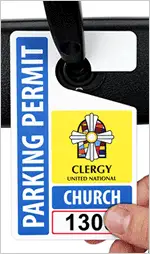
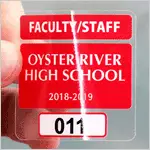
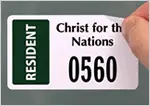
– For Long-Term Residents: Parking Decals are the high-security choice. They are non-transferable (one permit, one car), which is the best way to stop unauthorized sharing. Durable Plastic Hang Tags are a great alternative for flexibility if residents frequently change cars.
– For Staff/Employees: Parking Hang Tags are ideal. Staff may drive different cars, and a hang tag is easy to transfer between vehicles.
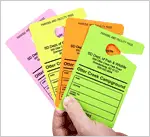
– For Visitors/Temporary Use: Temporary Guest Passes (either paper hang tags or “destructible” stickers) are non-negotiable. They must have a clear expiration date and/or time written on them to be effective.
(This is a critical decision. For a full breakdown, see our guide: “Choosing the Right Parking Permit: Hang Tags vs. Decals vs. Stickers”)
Step 4: Design & Order Your Professional Permits
An unprofessional permit (like one printed on office paper) gets unprofessional results. Your permits are tool of authority and must look the part.
Include these 5 key features on your custom parking permit design:
1. Sequential Numbering: This is essential. It’s your primary administrative tool for tracking which permit number is assigned to which resident and vehicle.
2. Clear Expiration Date: (e.g., “Expires 12/31/2026”) This forces an annual or bi-annual reset of your system, purges old residents, and ensures compliance.
3. Your Property Name/Logo: This makes it official and reinforces your brand.
4. Clear Text & Color-Coding: Use large, bold text (e.g., “RESIDENT,” “STAFF”) and different colors for your zones (e.g., Red = Staff, Blue = Resident).
5. Security Features: For high-demand parking areas, Holographic Parking Passes are un-copyable and instantly signal a valid permit.
Step 5: Announce the New System to Residents
You must communicate the change clearly, fairly, and repeatedly. There should be no surprises.
– How-To: Send out the new parking policy (from Step 2) via every channel you have: email, community portals, posted notices in elevators/mailrooms, and even physical letters.
– Pro-Tip: Announce the new rules 30 days before enforcement begins. This is your grace period. It gives residents time to complain, ask questions, and most importantly register their vehicles and get their new permits before any consequences are handed out.
Step 6: Distribute Permits & Enforce Your Policy Consistently
This is it. “Go-live” day.
– Distribution: Do not just leave permits in mailboxes. Have residents come to the office to pick up their permit. When they do, have them sign a one-page form that states: “I have received permit #[Permit Number], I have read and understood the parking policy (from Step 2), and I agree to its terms.” This creates a paper trail of accountability.
– Enforcement: On Day 1, your grace period is over. You must be 100% consistent. Enforce the rules for everyone, including staff and management, to show fairness.
– Enforcement Tools: Make it easy.
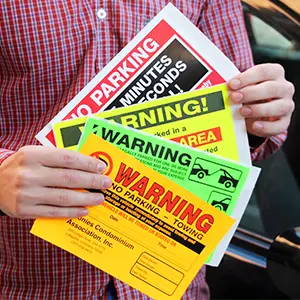
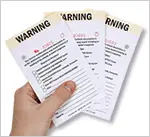
For first-timers, a simple written Parking Violation Tag left on the windshield is a good formal notice.
For repeat or blatant offenders (like a car in a fire lane), use professional Parking Violation Stickers. They are hard to ignore, weather-resistant, and show you are serious about your rules.

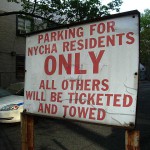
– Partner with a local towing company before you need one. Have your contract in place and post their signs (if required by your local laws).
From Parking Chaos to Complete Control
Implementing a parking permit system may seem like a lot of work, but the payoff is immediate and lasting. You will eliminate one of your biggest sources of resident complaints, make your property safer, and present a more professional, secure image.
By following these 6 steps from data-driven planning and iron-clad policy-writing to using the right parking stickers and tags for enforcement you can roll out a fair and effective system that puts you, not the offenders, back in control.
Frequently Asked Questions (FAQ)
1. What is the single most important step in creating a parking permit system?
A.: The most important step is Step 2: Writing your Parking Rules & Policy. The physical permits (tags, decals) are just the tools. The written policy is the foundation of your entire system. It’s the document you, your residents, and your enforcement team will rely on. It must be simple, clear, and comprehensive.
2. How do I handle guest parking fairly without it getting abused?
A.: The best way is with a dedicated temporary guest pass system. These passes (either paper hang tags or stickers) must have a clearly written expiration date and time. Your policy (Step 2) should define the limits, such as “One pass per resident, valid for 48 hours,” and “Guests must park in ‘Guest’ designated spaces only.”
3. Should I use parking hang tags or decals for residents?
A.: It depends on your primary goal. If your #1 problem is unauthorized permit sharing (e.g., residents giving permits to non-residents), use Parking Decals. They are non-transferable and assigned to one specific car. If your residents value flexibility (e.g., they own multiple cars or switch vehicles often), use durable Plastic Hang Tags.
4. What’s the best way to handle residents with multiple cars?
A.: This is a key question for your policy (Step 2). You have two main options: 1) Issue Parking Hang Tags, which are easily transferable between their registered vehicles. 2) Issue Parking Decals for each specific vehicle, but consider charging an additional fee for the second or third permit, especially if parking is limited.
5. What’s the best way to enforce parking rules without angering residents?
A.: The key is the 3 C’s: Communication, Courtesy, and Consistency.
– Communication: A clear policy (Step 2) and a 30-day advance announcement (Step 5) ensure no one is surprised.
– Courtesy: A “grace period” at launch and a “warning” system (like a violation tag) for first offenses show that your goal is compliance, not punishment.
– Consistency: This is the most important. If residents see that rules are enforced fairly and equally for everyone, they will respect the system.
Ready to Build Your System?
Ready to get started? Your first step is designing the perfect, professional permits for your property.
Browse our full collection of Custom Parking Hang Tags, High-Security Decals, Temporary Guest Passes, and our complete line of Parking Violation Stickers and Tags.
Need help with your design or have questions? Our team has helped thousands of property managers. Call us today!






Category: Uncategorized
Recent Comments